
Taxes
Foreign Income in Spain's 2025 Tax Return: What Expats Should Check Before Filing
Living in Spain and earning income from abroad? Here is what expats and tax residents should check before filing the 2025 Spanish tax return.
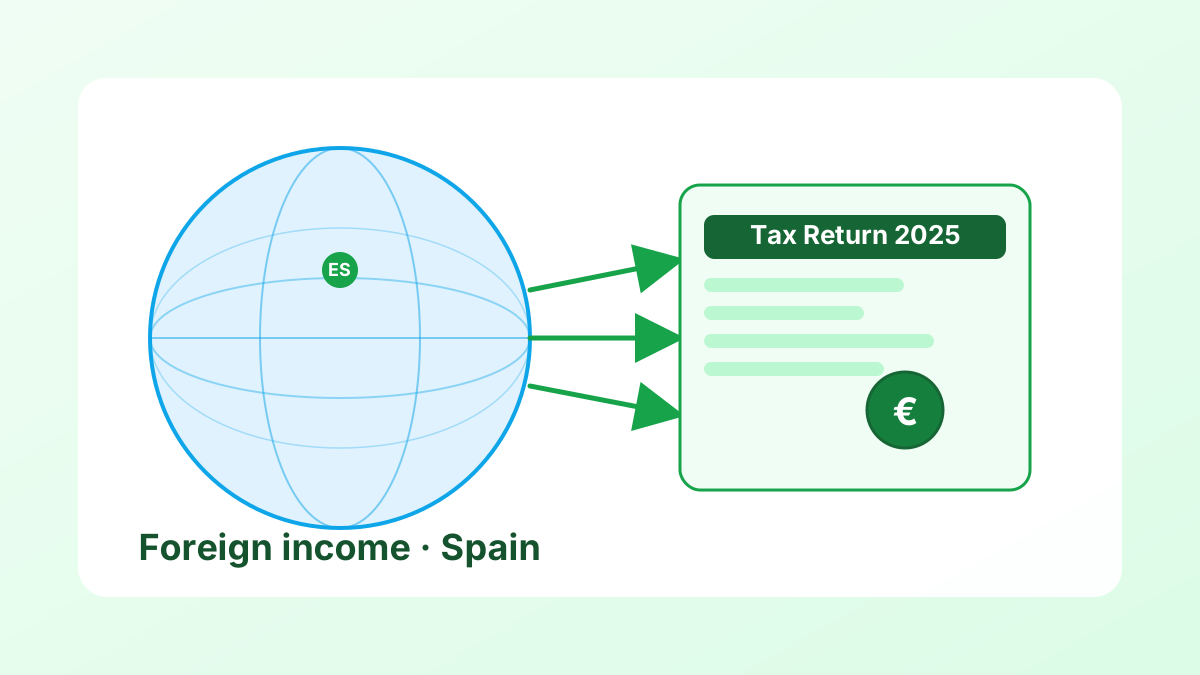
If you live in Spain, filing your Spanish tax return can get much more complicated when part of your income comes from abroad. Foreign pensions, overseas salaries, rental income from another country, or investment income can all create questions about what must be declared in Spain and how double taxation relief works. This year, the issue matters even more because foreign income is one of the areas attracting preventive warnings during the tax campaign, so expats and international residents should review this section carefully before filing.
For broader context, see the taxes pillar, the Spain tax return draft guide, and the guide on preventive tax alerts in Spain's 2026 campaign.
When does Spain consider you a tax resident?
This is the starting point. If you are not a tax resident in Spain, the rules are different. According to AEAT, a person is generally considered tax resident in Spain when at least one of the following applies:
- More than 183 days spent in Spain during the calendar year. Sporadic absences count unless you can prove fiscal residence in another country.
- Main base of economic activities or interests in Spain: when the core of your economic activities or financial interests is located in Spain.
- Family presumption: if your spouse (not legally separated) and dependent minor children habitually reside in Spain, the law presumes you are also resident here.
The last point is easy to overlook. Many people know the 183-day rule but miss the economic interests criterion or the family presumption. If you are unsure about your status, checking AEAT's residency guidance before assuming you are a non-resident is worthwhile.
If you are resident in Spain, do you have to declare foreign income?
In general, yes. Spanish tax residents are taxed on their worldwide income, meaning all income regardless of where it was earned or where the payer is located.
AEAT has a dedicated section specifically for residents with income from abroad, which reflects how commonly this situation arises. The fact that money comes from outside Spain does not exempt it from the Spanish return if you are a fiscal resident here.
The deciding factor is not where the payer is based. It is where your fiscal residence is.
The foreign income areas expats should review first
AEAT organises its guidance for residents with foreign income around the most common categories. These are the ones that most frequently generate questions:
Pensions from abroad. This is one of the most common expat mistakes. Many retirees living in Spain assume a pension paid from another country does not need to be declared here. In general that is not correct: if you are a fiscal resident in Spain, the pension may be subject to Spanish income tax, although the exact treatment depends on the applicable double tax treaty and the type of pension.
Salary or freelance income from a foreign employer. If you work for a foreign company or provide freelance services to overseas clients, that income may be relevant for your Spanish return. The deciding criterion is your tax residency, not the origin of the contract.
Rental income from property outside Spain. If you own a property abroad generating rental income, those amounts need to be evaluated for the Spanish return. If your situation is the reverse —you live abroad and rent out a property in Spain— see the guide to Model 210 for Spanish rental income as a non-resident.
Dividends, interest, and investment income from abroad. Returns from foreign bank accounts, shares in overseas companies, or international funds may need to be included in the Spanish return as capital income or capital gains.
Capital gains from sales abroad. If you sold an asset in another country, the gain or loss may be relevant for Spanish income tax.
Foreign pensions: one of the most common expat mistakes
AEAT explains that when a pension comes from another country, the tax treatment depends on the applicable double tax treaty and the nature of the pension. Not all foreign pensions are treated the same: a public pension from a foreign state may be treated differently from a private pension from the same country.
The important thing is not to assume that because tax was already paid in the country of origin, Spain has no claim. The treaty may provide for an exemption, or it may provide that Spain taxes the pension with the right to deduct what was paid abroad. Each case requires checking the specific treaty.
The practical step before filing is to identify exactly what type of pension it is, which country pays it, and what the double tax treaty between Spain and that country says.
Salary or freelance income from abroad
If you work for a foreign company while residing in Spain, that salary generally falls within the Spanish income tax base. The position can vary if there is a double tax treaty that allocates exclusive taxing rights to the other state, but that requires analysing the specific treaty.
For freelancers working with overseas clients, the logic is similar: income from services provided from Spain to international clients is treated as business income subject to Spanish income tax alongside your other activity income.
Rental income or investments outside Spain
If you have financial assets in foreign banks, dividends from shares listed on other markets, or interest from overseas accounts, those amounts may need to be included in your Spanish return as capital income or capital gains.
It is also worth reviewing whether there are any specific informational reporting obligations related to assets held abroad, although that is separate from the income tax return itself.
What about double taxation?
Declaring foreign income in Spain does not automatically mean paying tax twice. Spain has double tax treaties with many countries, and Spanish law also contains mechanisms to avoid or limit double taxation when income has already been taxed at source.
The specific outcome depends on:
- The double tax treaty between Spain and the country of origin, which may allocate taxing rights or provide for exemptions.
- The nature of the income, since treaties can treat salaries, pensions, dividends, and rental income differently.
- Spanish domestic relief, which in some cases allows a deduction from the Spanish tax bill for taxes already paid abroad.
The key is not to assume that paying tax abroad means Spain ignores the income. But also not to assume Spain will tax the full amount without considering what was paid elsewhere. Reviewing the treaty and the specific facts is the essential step.
Why this matters more in this year's tax campaign
The 2025 tax campaign has foreign income as one of its focus areas. The preventive alerts that AEAT sends before filing include this category alongside crypto, rentals, and digital platform sales. That does not mean there is an automatic error, but it does mean this area deserves careful review before confirming the draft.
You can read more about these alerts in the guide on preventive tax alerts from Hacienda in 2026.
A practical checklist before filing
Before confirming your return, these are the points worth reviewing if you have foreign income:
- Confirm whether you are a fiscal resident in Spain for 2025 (days present, economic interests base, family situation).
- List all income received from outside Spain during the year.
- Identify whether any of that income was already taxed abroad.
- Check whether a double tax treaty applies between Spain and the relevant country.
- Review whether your draft already reflects all relevant foreign income.
- Do not assume a foreign payer means the income stays outside your Spanish return.
If you have specific questions about treaties or how to declare a particular type of foreign income, consulting a tax adviser before filing is the safest approach.
Frequently asked questions
Do expats in Spain have to declare foreign income in the Spanish tax return?
In general yes. Spanish tax residents are taxed on their worldwide income, so income from abroad may need to be included in the Spanish return. The exact treatment depends on the type of income and any applicable double tax treaty.
When are you considered a tax resident in Spain?
If you spend more than 183 days in Spain during the calendar year, if your main economic interests are based in Spain, or if your spouse and minor children habitually reside in Spain. Meeting any one of these criteria is generally enough.
Are foreign pensions taxable in Spain?
They may be. The treatment depends on the applicable double tax treaty and the type of pension. AEAT explains that the relevant treaty must always be checked because it can contain particular rules for each type of pension.
Does declaring foreign income always mean paying tax twice?
No. Spain has double tax treaties with many countries and its domestic law also provides mechanisms to avoid double taxation. But the specific case needs to be reviewed — you cannot assume the outcome in either direction.
Why is foreign income especially important in this year's campaign?
Because it is one of the categories linked to preventive alerts before filing in the 2026 campaign, which makes it a timely review point for anyone with income from outside Spain.
Conclusion
For expats and international residents, the real risk is often not a complex tax strategy but a simple wrong assumption: believing that income paid from abroad does not belong in the Spanish tax return. If you live in Spain and qualify as a tax resident, this is one of the areas worth checking most carefully before filing. Review the draft, check whether your foreign income is reflected, and if you have doubts about a specific type of income or how a double tax treaty applies, seek professional advice before confirming.
Sobre el contenido de esta guía
Este artículo ha sido escrito por Cristian Moreno para Finanzas Fáciles. Analizamos datos de organismos oficiales como el Banco de España y el INE.
Las guías se revisan periódicamente para reflejar cambios económicos y financieros en España. Este contenido es informativo y educativo. No constituye asesoramiento financiero, fiscal ni legal personalizado.
Fuentes
- https://sede.agenciatributaria.gob.es/Sede/ciudadanos-familias-personas-discapacidad/residentes-rentas-procedentes-extranjero.html
- https://sede.agenciatributaria.gob.es/Sede/no-residentes/residencia-personas-fisicas-juridicas/persona-fisica-residente-espana.html
- https://sede.agenciatributaria.gob.es/Sede/ciudadanos-familias-personas-discapacidad/residentes-rentas-procedentes-extranjero/obtencion-pensiones-procedentes-otro-pais.html