
Taxes
Missed your Spain tax return: what happens and how to reduce the damage
If you missed the Spain Renta deadline, acting quickly can reduce surcharges and penalties. Learn what to do if your return is to pay, refund or nil.
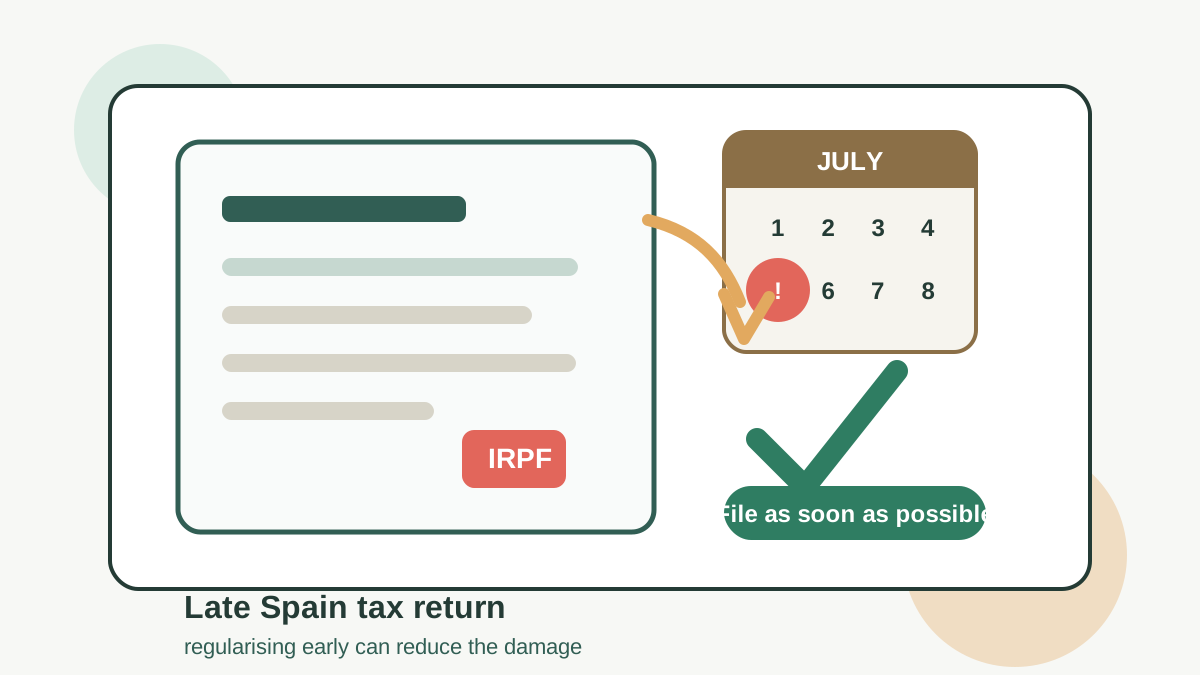
Missed your Spain tax return: what happens and how to reduce the damage
If you missed your Spain tax return deadline, the worst response is to freeze and wait. The practical priority is to check whether you were required to file, calculate the result, and act before the situation becomes more expensive.
For the 2025 Renta campaign, the general filing deadline was 30 June 2026. If that date has passed, you are no longer dealing with a last-minute campaign task. You are dealing with a late filing situation. This guide explains what happens if you did not file, why voluntary regularisation matters, and how to reduce the cost.
For the deadline context, see the guide to the Spain tax return deadline 2026. For the wider process, visit the taxes pillar, the Spain tax draft guide, and the explanations of a Renta to pay or a Renta refund.
First, check whether you were required to file
Not filing a tax return is not always a breach. Some taxpayers are not required to submit a Spanish income tax return because of their income level and circumstances. That is why the first step is to check whether you actually had a filing obligation.
The obligation can depend on employment income, the number of payers, unemployment benefits, investment income, rental income, capital gains, self-employment activity, deductions, foreign income and other factors. A simple single-employer case is not the same as a year with job changes, benefits, investment sales or overseas income.
The practical starting point is simple: open Renta WEB, review your tax data and calculate the draft. Even if you later speak to an adviser, you need to know whether a filing obligation exists and what the approximate result would be.
Voluntary filing is usually better than waiting
There is a major difference between filing late voluntarily and filing after Hacienda contacts you.
When you file after the deadline without a prior request from the tax authority, you are regularising voluntarily. If the return is to pay, Agencia Tributaria applies late filing surcharges. It is not ideal, but it is usually more controlled than waiting.
If Hacienda sends a formal request before you file, the situation changes. You are no longer correcting spontaneously. Penalties, additional procedures and less favourable treatment may come into play. If you already know the return is missing, waiting rarely improves your position.
If the return is to pay
If your return is to pay and you file late without a prior request, the main consequence is a surcharge. According to Agencia Tributaria, the surcharge is 1% plus an additional 1% for each full month of delay during the first twelve months.
For example:
- filing within the first month after the deadline means a 1% surcharge;
- after three full months, the surcharge is 3%;
- after twelve full months, it reaches 12%;
- after more than twelve months, the surcharge becomes 15% and late interest is added from the day after that twelve-month period.
The surcharge is calculated on the tax due. A late return with 300 euros to pay is not the same as one with 4,000 euros to pay. The larger the amount and the longer the delay, the more important it is to act quickly.
If you cannot pay everything at once, do not use that as a reason not to file. Filing and then reviewing a payment deferral may be better than leaving the return unsubmitted. Agencia Tributaria provides a procedure to request deferral or offset after filing in certain cases.
If the return is a refund
If your return is a refund, the financial damage is usually lower because you have not failed to pay tax due. But that does not mean the issue disappears.
If you were required to file, the formal obligation still exists even if Hacienda owes you money. Late filing can delay your refund and, if the tax authority acts first, it can lead to a penalty procedure for missing the deadline.
There is also a cash-flow angle. If you were due a refund, not filing delays money that could have helped your personal budget. In that case, the practical move is usually to file as soon as possible, check the bank account details carefully, and keep the filing receipt.
If the result is nil
A nil return should not automatically be ignored either. There may be no amount to pay and no refund, but if you were required to file, missing the deadline can still matter.
Separate two questions:
- Were you required to file?
- If you file, is the result to pay, refund or nil?
The second answer does not erase the first. If your case is borderline, do not decide by intuition. Review the draft, check the tax data and, if there is complexity, get help before assuming nothing is needed.
What to do now, step by step
The order matters. If you are already outside the deadline, work calmly and practically.
1. Open Renta WEB and calculate the result
You cannot make a good decision without numbers. Check whether the draft is to pay, refund or nil. Also review warnings, pending data and information that Hacienda may not have included automatically.
2. Check income and withholdings
Review employment certificates, benefits, bank income, rental income, investment sales, funds, crypto if relevant, and foreign income. Errors in a late return can create additional complications.
3. If it is to pay, file as soon as possible
Each full month of delay can increase the surcharge. If the amount is manageable, paying quickly reduces uncertainty. If you cannot pay the full amount, look at the deferral route, but do not leave the return unfiled only because you do not have the full cash today.
4. If it is a refund, file if you were required to
A refund return may feel less urgent, but the sooner you submit it, the sooner the refund process starts and the lower the chance that Hacienda acts first.
5. If you already received a notice, read it first
If Hacienda has already contacted you, read exactly what it asks for and what deadline applies. Do not respond blindly or submit doubtful figures just to "close the issue". At that point, professional tax advice may be worthwhile.
Mistakes that increase the damage
The first mistake is waiting. Hope does not reduce surcharges or penalties. If the return is missing and you were required to file, time usually works against you.
The second mistake is filing anything without review. Filing late is usually better than doing nothing, but an incorrect return can lead to amendments, supplementary returns or further issues. Speed matters, but it should not replace a basic review.
The third mistake is confusing "I cannot pay" with "I cannot file". These are different problems. You may file a return to pay and then manage payment through the available routes. Leaving the return unfiled is usually worse.
The fourth mistake is assuming that a refund result means there is no risk. If there was a formal obligation to file, a refund does not automatically remove the missed deadline issue.
When to get professional help
A simple return with clear data may be manageable on your own. But some cases deserve a professional review:
- multiple payers or unusual withholding;
- foreign income;
- rentals, property sales or crypto;
- self-employment activity;
- an official notice already received;
- high amounts to pay;
- uncertainty about whether you were required to file.
The point is not to delegate out of fear. It is to avoid turning a late filing into a chain of avoidable mistakes.
Conclusion
If you missed the Spain tax return deadline, act quickly and in order. First check whether you were required to file. Then calculate the result. If it is to pay, filing quickly can limit surcharges. If it is a refund or nil, do not ignore it if the filing obligation existed.
The practical rule is clear: voluntary regularisation is usually better than waiting for Hacienda to contact you. In tax matters, recognising the problem early does not erase it, but it can reduce the damage.
Sobre el contenido de esta guía
Este artículo ha sido escrito por Cristian Moreno para Finanzas Fáciles. Analizamos datos de organismos oficiales como el Banco de España y el INE.
Las guías se revisan periódicamente para reflejar cambios económicos y financieros en España. Este contenido es informativo y educativo. No constituye asesoramiento financiero, fiscal ni legal personalizado.
Fuentes
- https://sede.agenciatributaria.gob.es/Sede/ayuda/contenidos-lectura-facil/calendario-contribuyente-2026-simplificado-personas-fisicas/fechas-campana-renta-patrimonio.html
- https://sede.agenciatributaria.gob.es/Sede/ayuda/manuales-videos-folletos/manuales-practicos/irpf-2025/c18-cuota-liquida-resultante-autoliquidacion/regularizacion-situaciones-tributarias/recargos-aplicables.html
- https://sede.agenciatributaria.gob.es/Sede/procedimientos/GZ71.shtml
- https://sede.agenciatributaria.gob.es/Sede/ayuda/consultas-informaticas/renta-ayuda-tecnica/solicitar-aplazamiento-compensacion-tras-presentacion-renta.html
- https://www.boe.es/buscar/act.php?id=BOE-A-2003-23186#a198