
Taxes
Spain tax return deadline 2026: June dates and what happens if you file late
Spain's 2025 Renta campaign ends on 30 June 2026, but direct debit closes earlier. Learn the key dates, last checks and late filing consequences.
Spain tax return deadline 2026: June dates and what happens if you file late
The Spain tax return deadline for 2026 is approaching. The 2025 Renta campaign closes on 30 June 2026, but if your return is to pay and you want to use direct debit, the practical deadline is earlier.
This guide focuses on the final stretch of the campaign: the dates to know, what to check before filing, and what happens if you submit late. If the deadline has already passed and you still have not filed, see the practical guide on what to do after missing your Spain tax return. For the broader process, see the taxes pillar, the Spain tax draft guide, how to pay your Renta with Bizum or card, and what it means when your Renta is to pay.
Key Renta 2025 dates in June 2026
The 2025 Spanish income tax return is filed during the 2026 campaign. According to the official Agencia Tributaria calendar, online filing runs from 8 April to 30 June 2026.
The most important final dates are:
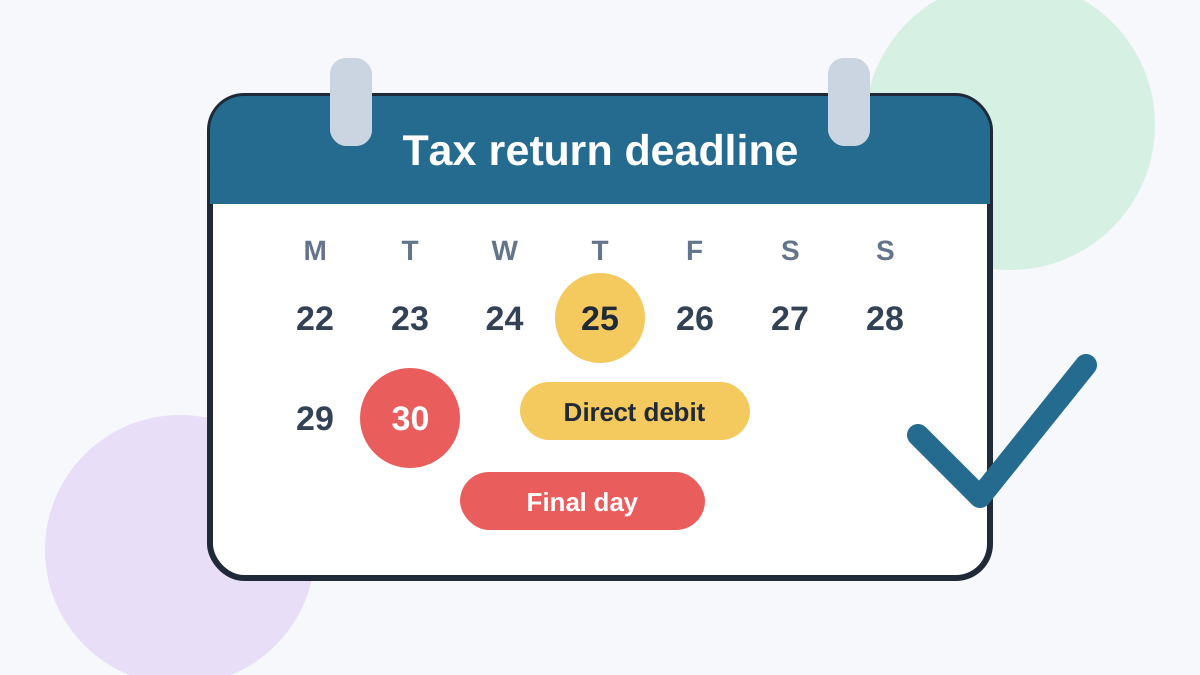
- 25 June 2026: last day to file a return to be paid using direct debit.
- 29 June 2026: last day to request a Le Llamamos phone appointment or an in-person appointment, subject to availability.
- 30 June 2026: general end of the campaign for returns with a refund, nil result, and payments made without direct debit for the first instalment.
The difference between 25 June and 30 June matters. The final campaign deadline is 30 June, but direct debit needs additional processing time. If you wait until the last days and your return is to pay, you may still be able to file, but you will need another valid payment method.
What to do if you have not filed yet
If you are close to the deadline, the goal is not to rush blindly. It is to avoid confirming an incomplete draft while still filing on time.
Start by opening Renta WEB and checking whether your return is almost ready or needs review. If basic data is missing, compare the draft with employment certificates, bank statements, rental information, foreign income records, and any relevant supporting documents.
Then look at the result:
- if it is a refund, check that deductions and bank details are correct;
- if it is to pay, decide the payment method before confirming;
- if the result is zero or nil, verify whether you are still required to file.
The draft is a starting point, not a guarantee. If you are an expat or have non-standard income, a last-minute review is especially important.
If your return is to pay: direct debit closes earlier
Direct debit is convenient: you enter your IBAN and Hacienda charges the amount automatically. But for the 2025 Renta campaign, the deadline to direct-debit returns to be paid is 25 June 2026.
After that date, the campaign is not over. You can still file until 30 June, but you need a different payment method. Depending on the filing flow, this may include card, Bizum, electronic payment with NRC, or recognition of debt.
If the amount is high, also review the 60/40 split payment option. It is not the same as requesting a deferral. The ordinary split lets you pay part now and the remainder in November, while a deferral is a separate request and may generate late interest.
Last checks before submitting
In the final days, avoid two extremes: confirming without looking or trying to rebuild everything from scratch. A useful review should focus on the items most likely to change the result.
Check at least:
- all employers, payers and withholdings;
- rental income, capital income and foreign income;
- regional deductions that may not be obvious in the draft;
- the IBAN for refunds or direct debit;
- whether individual or joint filing is better, if relevant;
- any preventive messages shown before submission.
If Hacienda shows a warning, read it carefully. It does not automatically mean there is a problem, but it does point to an area worth checking. The guide to Spain tax return preventive alerts explains the most common cases.
What happens if you file late in Spain
Late filing does not always have the same consequence. It depends on whether you were required to file, whether the result is to pay or refund, and whether you submit voluntarily before Hacienda contacts you.
The practical rule is simple: if you missed the deadline, act as soon as possible. Waiting usually makes the situation worse.
When a self-assessment return is to be paid and is filed voluntarily after the deadline, without a prior request from the tax authority, Spain's General Tax Law applies late filing surcharges. Under the current system, the surcharge starts at 1%, plus an additional 1% for each full month of delay during the first twelve months. After twelve months, the surcharge becomes 15%, and late interest is added from the day after those twelve months.
This does not mean every delay becomes an automatic penalty, but it does make regularisation more expensive. If Hacienda contacts you first, the situation may be less favourable because you are no longer correcting voluntarily.
If the result is a refund or zero
Some taxpayers assume that filing late does not matter if the return is a refund. Be careful. If you are required to file, the obligation exists even when Hacienda owes you money.
In practice, a late refund return is usually less severe than unpaid tax, but it can still create administrative issues and delay the refund. If you are unsure whether you are required to file, check the general requirements or get professional help.
There is also a cash-flow angle: if you expected the refund to cover other expenses, filing after the campaign ends simply delays that money.
What to do if you already missed the deadline
If you are reading this after 30 June and have not filed, follow a simple order:
- Access Renta WEB and calculate the result.
- Check whether you were required to file.
- If the result is to pay, consider filing voluntarily as soon as possible.
- Save the filing receipt and supporting documents.
- If the return is complex, ask for advice before submitting doubtful figures.
The worst move is usually doing nothing. Voluntary correction generally gives you more control than waiting for Hacienda to detect the omission first.
Conclusion
For the 2025 Renta campaign, remember two dates: 25 June 2026 for direct debit payments and 30 June 2026 as the general campaign deadline. In the final days, review the essential data, choose your payment method and avoid leaving submission until the last moment.
If you already missed the deadline, do not ignore it. Calculate the return, check the result and regularise as soon as possible if required. With the Spanish tax return, acting late is usually better than waiting for Hacienda to act first.
Sobre el contenido de esta guía
Este artículo ha sido escrito por Cristian Moreno para Finanzas Fáciles. Analizamos datos de organismos oficiales como el Banco de España y el INE.
Las guías se revisan periódicamente para reflejar cambios económicos y financieros en España. Este contenido es informativo y educativo. No constituye asesoramiento financiero, fiscal ni legal personalizado.
Fuentes
- https://sede.agenciatributaria.gob.es/Sede/ayuda/manuales-videos-folletos/manuales-practicos/irpf-2025/guia-principales-novedades/gestion-impuesto.html
- https://sede.agenciatributaria.gob.es/Sede/ayuda/contenidos-lectura-facil/calendario-contribuyente-2026-simplificado-personas-fisicas/fechas-campana-renta-patrimonio.html
- https://sede.agenciatributaria.gob.es/Sede/ayuda/calendario-contribuyente/calendario-contribuyente-2026/calendario-anual/junio/hasta-30-junio.html
- https://www.boe.es/buscar/act.php?id=BOE-A-2003-23186#a27